What Actually Defines High-End Furniture
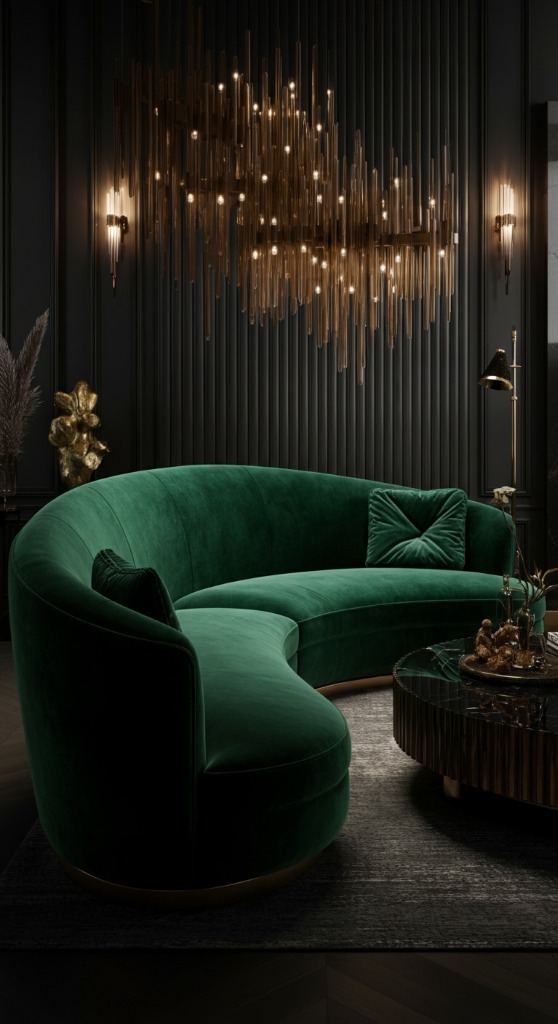
Sculptural velvet sofa with hand-finished brass lighting, a hallmark of atelier-grade furniture making.
Walk into any showroom and you will see price tags that range from a few hundred dollars to well over fifty thousand. The gap between cheap flat-pack pieces and heirloom quality comes down to three things: the raw material, the construction method, and the finishing process. Each one of these elements compounds the other. A solid walnut frame joined with mortise-and-tenon joints and finished by hand with natural oil will outlast a particleboard structure held together with staples and coated with a vinyl wrap by decades.
The Furniture Industry Research Association (FIRA) in the United Kingdom runs some of the toughest durability tests in the world. Their contract-grade standards require a seat to survive 200,000 cycles of a 110-kilogram load before it earns a pass. Most mass-produced sofas fail long before that mark. True premium pieces clear it with room to spare because the internal frame, the spring system, and the foam density all work together rather than against each other.
Beyond testing, there is a sensory element that numbers alone cannot capture. Run your hand across a genuine full-grain leather surface and you will feel individual pores and natural markings. Touch a veneer printed to look like walnut and the difference becomes obvious. This tactile honesty is something artisans protect and buyers come to recognize over time.
Why Craftsmanship Matters More Than Brand Names
A famous logo on a tag does not guarantee lasting quality. What guarantees quality is the skill of the person who shaped, joined, and finished each part. In the Brianza district north of Milan, families have built furniture by hand for over five generations. Their workshops still use hand planes, chisels, and traditional hide glue alongside modern CNC routers. The technology supports the artisan rather than replacing them.
This is not limited to Italy. In the American Midwest, small studios near Grand Rapids, Michigan continue a woodworking tradition that dates back to the late 1800s. The region once produced more furniture than any other city in the United States, according to the Grand Valley State University archives. Today, a handful of those shops still operate with the same principles: kiln-dried hardwood, hand-cut dovetails, and finishes that take days, not minutes, to complete.
In Scandinavia, the Danish concept of "hygge" shaped an entire lineage of minimalist seating. Designers like Hans Wegner (who created over 500 chair designs) proved that comfort and clean form can coexist. The Danish Museum of Art and Design preserves many of those original prototypes, and modern workshops still reference them when developing new collections.
Every region brings a distinct philosophy to the workbench. That diversity is what makes the global market so rich and, for the buyer, so rewarding to explore.
The Science Behind the Materials

Light oak armchair showcasing visible grain and smooth, oil-finished surfaces.
Wood remains the backbone of most premium collections. But not all wood performs the same way. Oak, with a Janka hardness rating near 1,360, resists dents and wear in ways that pine (around 690 on the same scale) simply cannot. Walnut sits in between at roughly 1,010 and offers a rich chocolate tone that darkens with age. The USDA Forest Products Laboratory publishes detailed hardness and bending strength data for domestic and tropical species, making it a reliable reference when comparing options.
Kiln drying is another factor most shoppers overlook. Green lumber contains roughly 30 to 80 percent moisture. If a manufacturer skips proper kiln drying, that moisture escapes over months and causes warping, cracking, or joint failure. Reputable makers dry their stock down to 6 to 8 percent moisture content before milling begins.
Upholstery materials carry equal weight. Full-grain leather retains the entire grain surface and develops a patina over years of use. Top-grain leather has the imperfections sanded away, making it smoother but less character-rich. Among fabrics, performance velvet with stain-resistant treatments now rivals leather in durability while offering a softer sit. Linen remains the classic choice for a relaxed, breathable feel, though it wrinkles more easily.
Metal components round out the conversation. Brushed brass hardware, powder-coated steel frames, and hand-forged iron legs each bring structural integrity and visual contrast. Brass tarnishes gracefully and can be polished back to its original shine. Steel, when properly coated, resists corrosion for decades even in humid climates. For a deeper look at how these elements shape a finished piece, read our guide on top materials used in premium crafting.
Global Design Heritage and Regional Influence
Great design does not exist in a vacuum. Every chair, table, and cabinet reflects the culture and climate where it was born. Italian ateliers in Tuscany and Lombardy favor sculptural curves, rich marble accents, and lacquer finishes that catch light at every angle. Japanese woodworkers pursue the opposite: clean joints, natural timber finishes, and forms influenced by the "wabi-sabi" acceptance of imperfection. The Smithsonian's Cooper Hewitt Design Museum maintains one of the largest collections documenting these regional movements across centuries.
French Art Deco, which peaked in the 1920s and 1930s, still influences sofa silhouettes and console table forms worldwide. Bold geometric shapes, exotic veneers like Macassar ebony, and polished chrome were signatures of that era. Many contemporary luxury brands draw directly from those proportions while updating the finishes for modern palettes.
Mid-century modern remains a dominant force in today's showrooms. The movement emerged in the 1940s through the 1960s in both America and Scandinavia, championed by designers such as Charles and Ray Eames, Arne Jacobsen, and Finn Juhl. Their work proved that molded plywood, fiberglass, and bent steel could carry emotional warmth alongside industrial efficiency. Original pieces from this period now sell at auction houses like Christie's and Phillips for significant sums, but faithful reproductions offer the same lines at accessible prices.
Understanding design heritage helps you recognize when a modern piece genuinely honors a tradition and when it merely copies a silhouette. That knowledge becomes a practical tool during any showroom visit.
The Real Investment Value of Premium Pieces
A quality dining table or a well-framed sofa performs differently from a mass-market alternative in three measurable ways: lifespan, resale value, and total cost of ownership.
Consider lifespan first. A kiln-dried oak dining table with proper joinery will serve a family for 25 to 40 years of daily use. A particleboard table coated with melamine typically shows visible damage within 3 to 5 years. Over a 30-year window, you could burn through six or seven budget tables. The cumulative cost often surpasses the single purchase price of the quality piece.
Resale value tells a similar story. Vintage Knoll, Herman Miller, and Fritz Hansen pieces regularly appear on secondary markets at prices that match or exceed their original retail. The 1stDibs marketplace and Chairish both report steady demand for well-preserved mid-century and contemporary designer pieces. Mass-produced items seldom hold any resale value.
Then there is the comfort factor. A cold-cured foam cushion in a premium sofa maintains its shape for over a decade. Lower-grade polyurethane foam compresses within months, leading to sagging seats and back pain. Your body notices the difference long before your eyes do. For a detailed exploration of how form and function intersect in premium seating and tables, read our feature on the art of design meets function.
Sustainability and Responsible Sourcing
The global home furnishings industry generates roughly 12 million tons of waste each year in the United States alone, according to the Environmental Protection Agency (EPA). Fast production cycles, cheap composites, and throwaway culture drive the bulk of those numbers. Choosing a durable, repairable piece directly fights that cycle.
Look for certifications that confirm responsible sourcing. The Forest Stewardship Council (FSC) label means the wood came from a forest managed for ecological balance. The Sustainable Furnishings Council tracks brands that meet criteria for low emissions, recyclable packaging, and fair labor in production.
Some makers now use reclaimed timber from old barns, factories, and rail ties. This salvaged wood carries a character that new lumber cannot replicate, with nail holes, weathering marks, and patina from decades of exposure. It also eliminates the need to fell additional trees.
Water-based finishes and plant-derived oils have replaced many solvent-heavy lacquers in responsible workshops. These alternatives release fewer volatile organic compounds (VOCs) into your home's air and break down more safely in landfills when the piece eventually reaches the end of its long life.
Room by Room Buying Guide
Choosing the right piece for each room requires more than matching a color palette. Room function, traffic patterns, and light exposure all influence how a material will age and how comfortable a seat will feel after years of use.
Living Room
This is the room that takes the most punishment. Families gather here, guests sit here, and pets claim the cushions as their own. A sofa frame built from kiln-dried hardwood with eight-way hand-tied springs will absorb that daily stress without sagging. Choose a performance fabric or a protected leather if you have children or animals. Pair the sofa with a solid-topped coffee table that resists water rings and heat marks.
Dining Room
A dining table anchors the space. Measure your room to leave at least 36 inches between the table edge and the nearest wall or neighboring piece. This gives chairs room to pull out without scraping paint. Hardwoods like white oak or European beech handle spills and scratches better than softer species. If you prefer stone, sealed quartzite resists staining more reliably than marble.
Bedroom
A bed frame with solid joinery should never creak. Test this in the store by pressing down on the rails and headboard. Silence means tight joints. Noise means loose connections or cheap hardware. Nightstands and dressers with dovetailed drawers open and close smoothly for decades without sticking.
Home Office
A desk should support monitor weight without flexing. Look for desks with reinforced center stretchers or steel underframes. Drawer slides rated for 75 pounds or more will hold files without bending. An ergonomic chair with adjustable lumbar support and breathable mesh or full-grain leather pays for itself in reduced fatigue over long work sessions. For ideas on commissioning a unique workspace built to your exact requirements, see our guide on custom-made pieces and personalization.
How to Spot Quality at the Showroom
You do not need a woodworking degree to separate premium from pretend. Five quick checks will tell you most of what you need to know.
- Flip it over. Quality pieces have smooth, finished undersides. Exposed staples, rough edges, and unfinished wood signal corners cut during production.
- Pull out the drawers. Dovetail joints interlock like puzzle pieces and hold without glue alone. Butt joints (two flat surfaces glued together) weaken over time and rarely survive heavy daily use.
- Sit on it hard. A well-built sofa or chair does not shift, wobble, or groan. If it moves under your weight in the showroom, it will only get worse at home.
- Check the fabric tag. Look for a rub count of at least 25,000 Martindale cycles for residential use. The British Standard (BS EN ISO 12947) governs this test. Anything below 15,000 is suited only for light decorative use.
- Ask about the frame. Request the species of wood, the drying method, and the joinery type. A reputable maker will answer without hesitation. If the salesperson cannot tell you, that is a warning sign.
Frequently Asked Questions
What makes furniture high-end?
It comes down to solid wood joinery, natural materials like full-grain leather or performance textiles, hand-finished surfaces, and small-batch production. FIRA notes that premium pieces go through 30 to 50 quality checkpoints before leaving the workshop, far more than any factory-line product.
Is high-end furniture worth the investment?
A well-made walnut dining table or kiln-dried oak frame can serve your household for 25 years or more. The Ellen MacArthur Foundation highlights that durable goods reduce replacement cycles and keep millions of tons of waste out of landfills each year. Over time, the cost per year of use drops far below a chain of budget replacements.
How do I spot quality joinery?
Open a drawer and look for dovetail or finger joints. Inspect the frame for mortise-and-tenon connections. Check corners of chairs and sofas for glued-and-screwed corner blocks. Avoid pieces held together only with staples or dowels, because those connections loosen with regular stress.
Featured Articles on Premium Furniture
The Art of High-End Furniture: Design Meets Function
Emerald velvet craftsmanship meets sculptural lighting design.
This guide examines how leading designers balance visual impact with everyday usability. You will learn how ergonomic research, space-efficient profiles, and multi-functional structures come together in a single piece that looks striking and works even harder.
Read the full guide
Top Materials Used in Luxury Furniture Crafting
Natural light oak grain on a minimalist armchair form.
From the hardness rating of quarter-sawn white oak to the breathability of Belgian linen, this article breaks down every material category with practical comparisons. Ideal reading before you visit any showroom or studio.
Read the full guide
Custom-Made Furniture: A Personalized Touch of Elegance
Bespoke furniture turns your specific needs into a finished product that fits your room, your lifestyle, and your taste. This article walks through the commission process, from initial sketches to material selection, production timelines, and final delivery.
Read the full guide